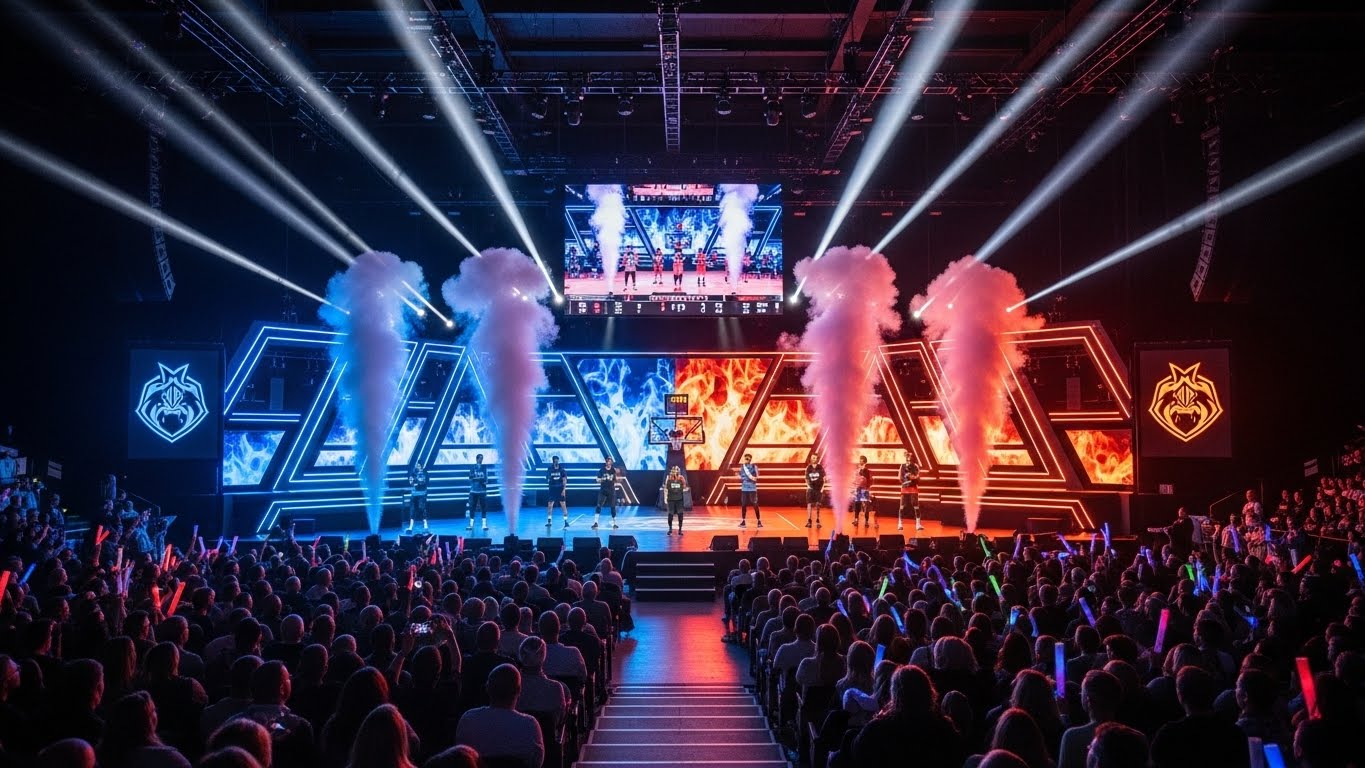
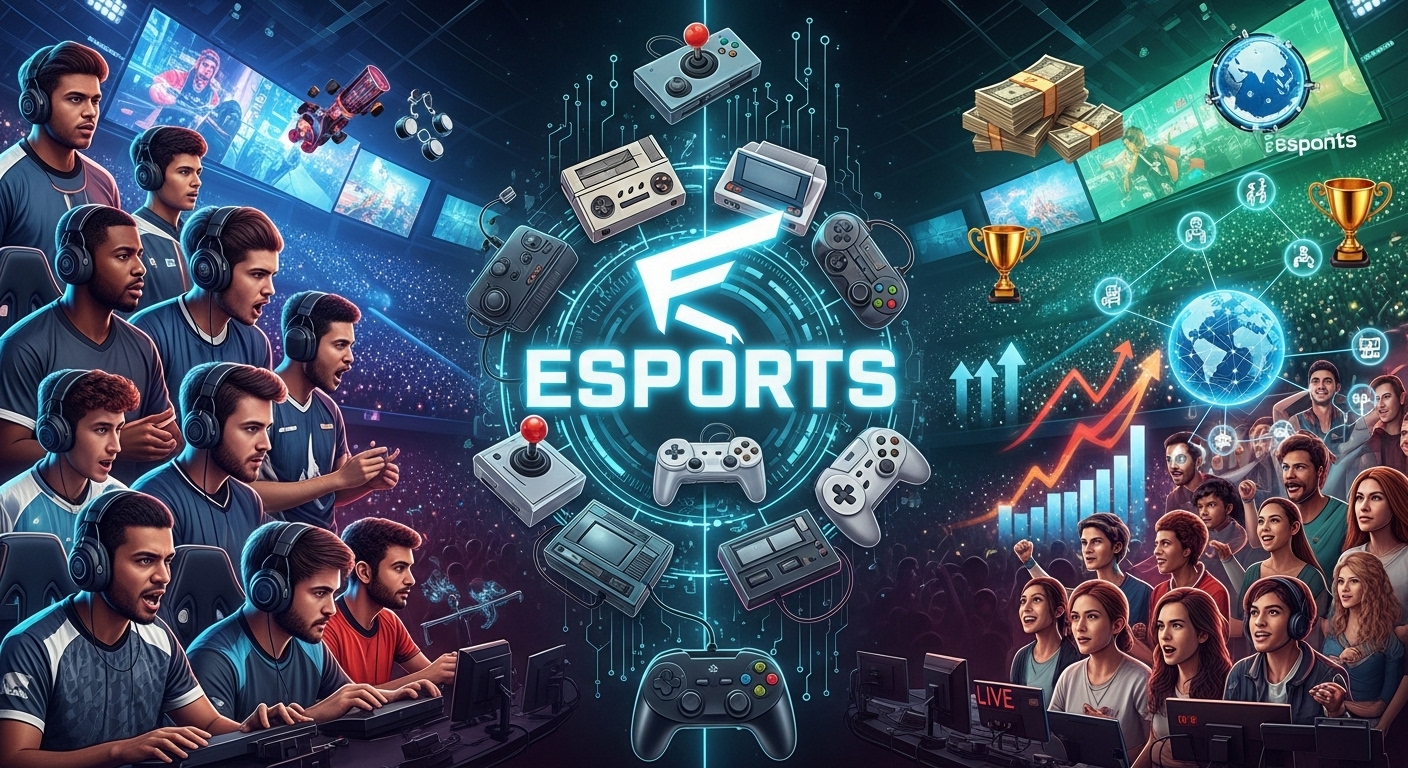
The world of entertainment has undergone massive shifts in the last few decades. Sports, long celebrated as one of the most powerful cultural connectors, have been challenged by a digital-native competitor: esports. Traditional sports like football, basketball, cricket, and tennis have always drawn millions of fans to stadiums and television broadcasts. But esports—competitive video gaming—has carved out a massive audience of its own, rivaling and in some cases surpassing traditional sports viewership.
This blog explores the similarities, differences, and evolving trends between traditional sports and esports audiences. We will look into demographics, consumption habits, cultural perceptions, monetization, global reach, and the future trajectory of both industries. By the end, you will have a clear understanding of why esports is no longer just a niche pastime but a competitor to the century-old traditional sports industry.
1. The Rise of Esports and Its Audience
In the early 2000s, competitive gaming was mostly a hobby for enthusiasts. Local LAN tournaments or small online competitions brought players together, but the scale was modest. Fast-forward to today, and esports has become a multi-billion-dollar global industry. Games like League of Legends, Dota 2, Counter-Strike, and Fortnite have turned competitive gaming into a spectacle that rivals the Super Bowl in viewership numbers.
For example, the League of Legends World Championship regularly garners more than 100 million unique viewers—numbers that parallel or even surpass some major traditional sports events. What makes this possible is the internet’s global reach. Fans from Asia, North America, Europe, and beyond can tune in simultaneously with minimal barriers.
This rapid rise has forced analysts to compare esports audiences to traditional sports fans, sparking questions about whether esports could one day surpass traditional sports entirely.
2. Traditional Sports Audiences: A Legacy of Generations
Traditional sports audiences have developed over centuries. Soccer, for instance, traces its global roots back to the 19th century, while cricket and baseball have been around even longer. These sports are deeply embedded in national identity, culture, and heritage. Families often pass down fandom through generations, creating a loyal audience base.
The viewing experience of traditional sports is tied to tradition. People gather in stadiums, sports bars, or living rooms to watch games. The rituals—wearing team jerseys, chanting slogans, celebrating victories—create strong emotional bonds between fans and their teams.
For traditional sports, audiences are not just spectators; they are participants in a cultural phenomenon. This historical depth is something esports, despite its exponential growth, is still building.
3. Demographic Differences Between the Two Audiences
One of the most significant differences between traditional sports and esports audiences is demographics.
Age Groups
- Traditional Sports: The audience skews older. Sports like baseball, golf, and cricket often attract middle-aged and older fans. Younger generations are present but not dominant.
- Esports: The majority of fans fall into the 16–34 age bracket. This group includes digital natives who grew up with video games as part of everyday life.
Gender
- Traditional Sports: Historically, male-dominated but with increasing female participation, particularly in soccer, basketball, and tennis fandoms.
- Esports: Still heavily male (around 70–80% in most markets), though female viewership is growing quickly as more inclusive games and platforms emerge.
Geography
- Traditional Sports: Regional dominance is common. For example, cricket in South Asia, baseball in the U.S. and Japan, or football (soccer) in Europe and Latin America.
- Esports: Far more globalized. A single game like League of Legends can have strong audiences in Korea, China, Europe, and the Americas simultaneously.
These demographic differences highlight how esports has tapped into a younger, global, tech-savvy audience, while traditional sports hold strong among older and regionally loyal demographics.
4. Consumption Habits: Stadiums vs. Streams
Traditional sports have relied on physical attendance and television broadcasts for decades. Fans love the stadium experience—the atmosphere, the crowd energy, the live action. Television has been the primary mode of reaching millions who cannot attend in person.
Esports, on the other hand, was born online. Streaming platforms like Twitch and YouTube Gaming are the arenas for esports fans. Instead of buying a ticket to a stadium, most fans log in for free. This accessibility has fueled esports’ global rise.
Another key difference lies in interactivity. Esports fans don’t just watch; they engage. They type in live chat, donate to streamers, and join fan communities on Discord. This interactive layer is something traditional sports broadcasts rarely offer. While Twitter or live commentary can complement a football match, it does not compare to the real-time engagement esports fans enjoy.
5. Emotional Connection: Rituals vs. Digital Communities
Sports fandom often comes with deep emotional ties. A football fan may support their local club from childhood and follow it through thick and thin. Winning championships becomes a source of pride, while losses can feel personal. These bonds are reinforced by physical rituals: singing anthems in stadiums, tailgating before games, or attending parades after victories.
Esports fans develop emotional connections differently. Instead of geographic loyalty, many fans support players or teams based on personality, playstyle, or game mastery. A streamer’s charisma might attract millions of loyal fans. Esports communities thrive in digital spaces like Reddit threads, YouTube highlights, and Twitch chats. These interactions build strong, albeit virtual, connections.
While traditional sports audiences bond through place and heritage, esports audiences bond through online culture and digital communities.
6. Sponsorship and Monetization Models
Traditional sports have long relied on sponsorships, broadcasting rights, merchandise, and ticket sales. Deals between leagues and TV networks are worth billions, ensuring fans must subscribe or tune in to catch games. Merchandise sales—from jerseys to caps—add another layer of revenue.
Esports monetization, while younger, is innovating fast. Sponsorships from tech companies, energy drink brands, and gaming peripherals are common. Broadcasting rights exist but are structured differently—often free-to-watch with sponsors embedded into streams. Revenue also comes from in-game purchases linked to esports events, virtual tickets, and exclusive digital content.
The esports audience, being digital-native, is more receptive to online-only products, like skins or emotes, whereas traditional sports fans still prefer physical merchandise. This highlights how audience preferences shape industry revenue streams.
7. The Scale of Events
Traditional sports have mega-events like the FIFA World Cup, Super Bowl, Olympics, and NBA Finals. These are not just games; they are cultural phenomena that attract billions worldwide. The audience for these events often extends beyond sports fans, reaching casual viewers and entire nations.
Esports has started creating its own mega-events. The Dota 2 International with its multi-million-dollar prize pool, or the League of Legends World Championship with elaborate stage productions, mirror the grandeur of traditional sports finals. But unlike traditional sports, esports events are more globally accessible online.
The difference lies in physical presence. A stadium can only hold so many, while an online stream can handle millions. This scalability means esports can rival traditional sports in total viewership without the same infrastructure limitations.
8. Perception and Legitimacy
Traditional sports audiences enjoy widespread cultural legitimacy. Supporting a football or basketball team is seen as normal, even prestigious. Sports athletes are national icons, and their achievements are celebrated universally.
Esports audiences, however, still face stigma. Older generations often dismiss gaming as a waste of time, and professional gamers are sometimes not seen as “real athletes.” Despite this, the perception is changing. As mainstream media covers esports and younger fans grow up, legitimacy is increasing. Universities now offer esports scholarships, and governments in countries like South Korea treat professional gamers with the same respect as traditional athletes.
This generational divide in perception plays a huge role in how audiences identify themselves. Traditional sports fans see themselves as part of a long-respected culture, while esports fans view themselves as pioneers of a modern, digital movement.
9. Attention Span and Content Consumption
Traditional sports games can last several hours. Cricket matches stretch across entire days, while baseball and American football are not known for brevity. Fans are willing to commit this time because of tradition and deep investment.
Esports, while sometimes long (like Dota 2’s best-of-five finals), generally caters to shorter attention spans. Many fans consume highlights, stream snippets, or influencer commentary rather than full matches. The digital audience prefers on-demand content, which contrasts with traditional sports’ reliance on live broadcasts.
This difference reflects the broader divide between generations raised on television and those raised on smartphones.
10. The Role of Technology
Technology shapes the experience of both audiences differently. Traditional sports audiences have benefited from HD broadcasts, VAR systems, and sports apps for updates. But fundamentally, the games themselves remain physical and unchanged by tech.
Esports audiences, however, are immersed in technology from start to finish. Games themselves evolve with patches, updates, and new content. Streaming platforms allow instant replay, multiple camera angles, and chat interaction. Technology is not just a tool but part of the sport itself.
This reliance on technology makes esports audiences more adaptive and digitally fluent compared to traditional sports fans.
11. The Globalization Factor
While both audiences are global, their patterns differ. Traditional sports are more regionally dominant—cricket is massive in South Asia but less so in the U.S., while American football is huge in the U.S. but has limited reach elsewhere.
Esports transcends these boundaries. A Chinese fan can support a European team, while an American player may become a superstar in Korea. Because games are globally accessible and not tied to geography, esports audiences are less restricted by nationality.
This globalization makes esports a unique cultural force. It fosters diverse communities where fans from around the world interact seamlessly.
12. Economic Power of the Audiences
Traditional sports audiences have tremendous spending power. Ticket sales, merchandise, subscriptions, and sports tourism generate billions. Families plan vacations around the Olympics or World Cups. Fans spend heavily on physical memorabilia and experiences.
Esports audiences, being younger, may have less disposable income individually but are incredibly engaged online. They spend money on microtransactions, digital passes, and streaming donations. Over time, as this young audience matures, their spending power will increase significantly.
Advertisers and sponsors recognize this potential, which is why investment in esports continues to grow.
13. Overlap Between the Audiences
It’s important to note that traditional sports and esports audiences are not mutually exclusive. Many fans enjoy both. A teenager might play FIFA online while also following real-world football. Similarly, an NBA fan might also watch NBA 2K League.
Cross-promotion is already happening. Traditional sports franchises like Paris Saint-Germain, FC Barcelona, and the NBA have invested in esports teams. This crossover reflects the blending of physical and digital sports cultures.
14. Challenges Each Audience Faces
- Traditional Sports: Aging fanbase, declining TV ratings among younger generations, and struggles to adapt to digital-first content consumption.
- Esports: Struggles with legitimacy, lack of standardized structures, player burnout, and over-reliance on specific platforms like Twitch.
Both industries face unique challenges, but both are learning from each other. Traditional sports are exploring streaming platforms, while esports is adopting traditional league structures for sustainability.
15. The Future: Convergence of Sports and Esports Audiences
The line between traditional sports and esports audiences will continue to blur. Technologies like virtual reality, augmented reality, and metaverse platforms may create hybrid experiences. Imagine watching a real football match with interactive digital overlays or an esports event hosted inside a virtual stadium that mirrors a real one.
Younger generations are open to both worlds. They may attend a local football match on Saturday and tune in to Twitch streams on Sunday. The industries are not destined to compete but to coexist and learn from one another.
Conclusion
Comparing traditional sports and esports audiences reveals a fascinating contrast between heritage and innovation, physical presence and digital interactivity, regional pride and global community. Traditional sports fans carry the weight of cultural history, while esports fans represent a forward-looking, digitally native movement.
While their demographics, consumption habits, and cultural legitimacy differ, both audiences share a passion for competition, community, and entertainment. Instead of seeing esports as a threat, it may be better to view it as the next evolution of sports fandom.